
You Deserve To Have Happy Feet
On this page, you’ll find the most common foot problems our HCPC-registered podiatrists, Linda and Richard, can help with. With 55 years of combined experience, you’ll be in safe hands.
Routine & Most Common Foot Problems
Corns, Calluses etc
Thickened Nails & Ingrown Nails
Athlete's Foot
Fungal Nails, Verrucas etc
Special Assessment & Treatment
Gait & Foot Mechanics
Diabetic Foot Assessment
Ingrown Toenail Surgery
Simple or Modified Insoles
Routine & Most Common Foot Problems
For nail care, hard skin and common skin or nail concerns.
Help with routine toenail and foot care
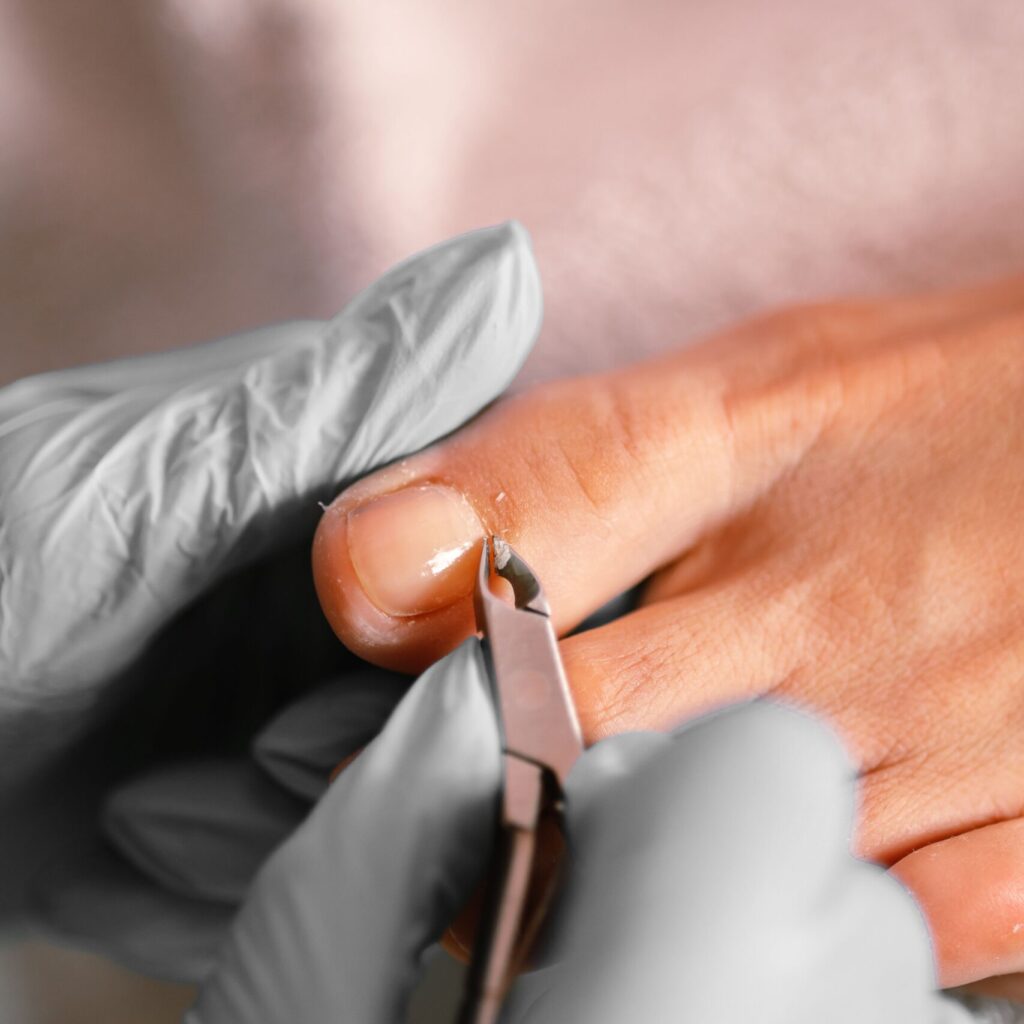
Toenails can become difficult to manage because they are thick, curved or hard to reach.
Reduced flexibility, poor eyesight, hand problems or a health condition may also make cutting your own nails uncomfortable or unsafe.
You do not need to wait until a nail becomes painful before asking a podiatrist for help.
What can a podiatrist help with?
Depending on your needs, an appointment may include:
- Cutting and filing difficult toenails
- Reducing the thickness of bulky nails
- Checking the surrounding skin
- Identifying pressure, rubbing or footwear problems
- Advice about safe foot care between appointments
- Discussing whether regular or occasional appointments may be appropriate
- A podiatrist can also examine nails that have changed in colour, shape or texture. These changes do not always mean that a fungal infection is present, so an assessment may help determine whether further testing, treatment or medical advice is appropriate.
Is routine foot care suitable if I have diabetes?
People with diabetes should take particular care when cutting their nails or treating hard skin. Tell the podiatrist about diabetes, circulation problems, reduced sensation, medication and any previous foot ulcers before treatment.
If you have a new wound, spreading redness, discharge, swelling or a hot foot, seek prompt medical advice rather than waiting for a routine appointment.
What happens at the appointment?
Your podiatrist will ask about your health, medication and any current foot concerns before examining your feet. Treatment and advice will be adapted to what is safe and appropriate for you.
Corns, Calluses, Hard Skin & Cracked Heels
What is the difference between a corn and a callus?
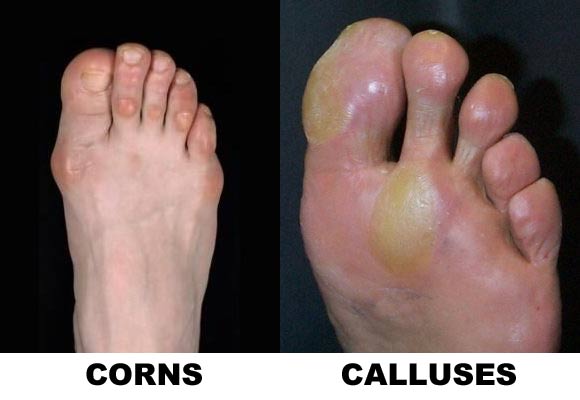
Corns and calluses are areas of thickened skin that develop in response to repeated pressure or friction.
A callus is usually a broader area of hard skin. A corn is generally smaller and more concentrated, sometimes with a firm central area that can become painful under pressure.
Common locations include:
- The soles or balls of the feet
- The heels
- The tops or sides of the toes
- Between the toes
- Areas affected by tight or rubbing footwear
Hard skin is not always simply a cosmetic problem. Its position can provide useful information about how pressure is being distributed across your feet.
Why do corns and hard skin keep returning?
Treatment can reduce the existing build-up, but it may return if the underlying pressure or friction continues. Contributing factors can include footwear, foot shape, toe position, activity levels and the way weight passes through the foot.
Your podiatrist may therefore look beyond the hard skin itself.
How may podiatry help?
Depending on the assessment, management may include:
- Carefully reducing corns or thickened skin
- Treating painful cracks where appropriate
- Moisturising and self-care advice
- Footwear recommendations
- Padding or pressure-relieving devices
- Toe separators where suitable
- Further assessment when repeated pressure may be contributing
Do not cut corns yourself or use acid-based corn plasters without professional advice, particularly if you have diabetes, poor circulation or reduced feeling in your feet.
When should I seek help quickly?
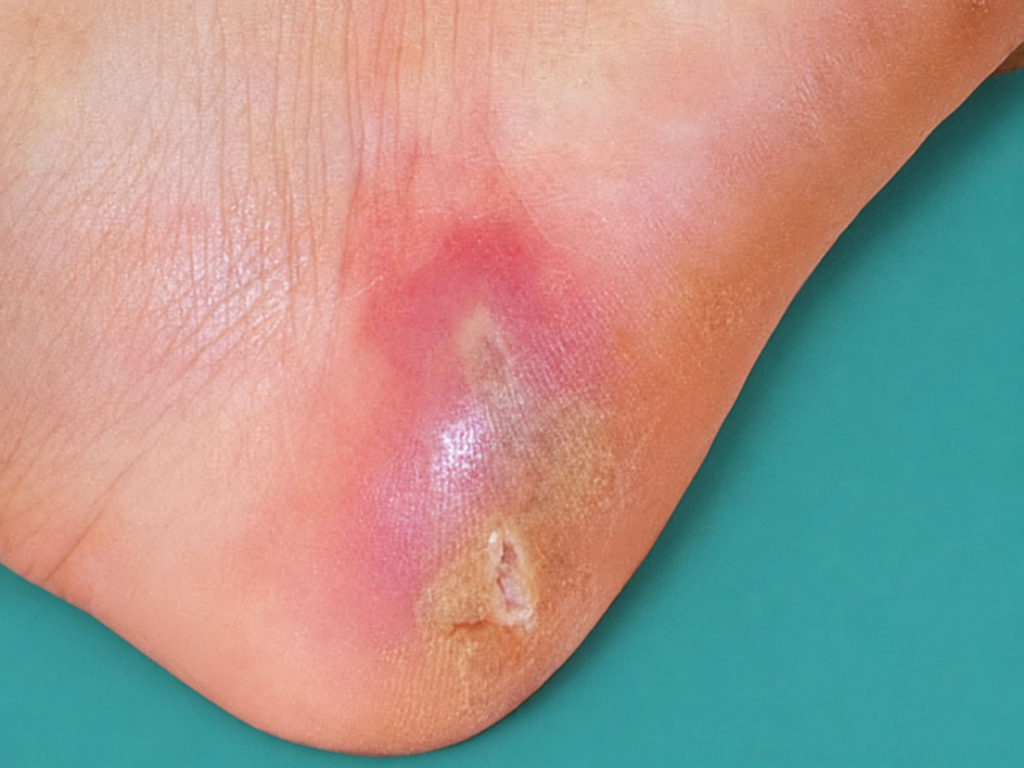
Seek prompt advice if cracked skin becomes red, hot, swollen, increasingly painful or produces discharge. People with diabetes or circulation problems should obtain advice promptly about any break in the skin.
Painful, Thickened & Ingrown Toenails
Why has my toenail become painful?
Toenail pain can have several causes. A nail may be pressing against the surrounding skin, becoming increasingly curved, growing into the skin or causing pressure inside footwear.
Nails may also become thickened following repeated pressure, previous injury, age-related changes, certain skin conditions or a possible fungal infection.
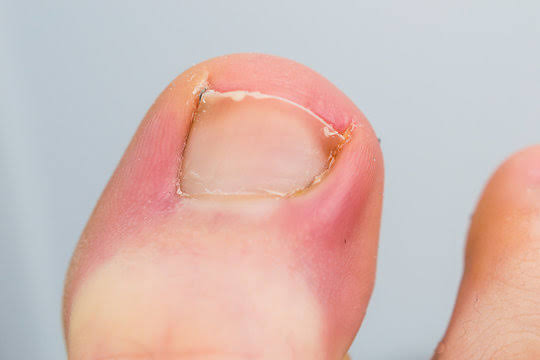
An ingrown toenail occurs when the edge or a small spike of nail presses into or breaks the surrounding skin. This commonly affects the big toe, although other toes can be involved.
Signs of an ingrown toenail
You may notice:
- Pain along one or both sides of the nail
- Tenderness when wearing shoes
- Red or swollen skin
- Bleeding or discharge
- Overgrown tissue beside the nail
- Repeated episodes affecting the same toe
Can it be treated without surgery?
Not every painful or curved toenail requires nail surgery. Depending on the cause and severity, a podiatrist may be able to reduce the thickness, remove a troublesome nail edge, manage pressure around the toe or suggest changes to nail care and footwear.
If the nail repeatedly becomes ingrown, is severely curved or remains painful despite conservative care, the podiatrist may discuss a nail-surgery assessment (see the ingrown toenail surgery tab below for more info)
What should I avoid doing?
Avoid digging deeply down the sides of the nail or attempting to remove it yourself. This can leave a sharp nail spike, injure the skin or make infection more likely.
Seek prompt medical advice if redness is spreading, pain is rapidly worsening, you feel unwell or there is significant swelling or discharge. This is especially important if you have diabetes, reduced immunity, poor circulation or reduced sensation.
Athlete's Foot
Is athlete’s foot always found between the toes?
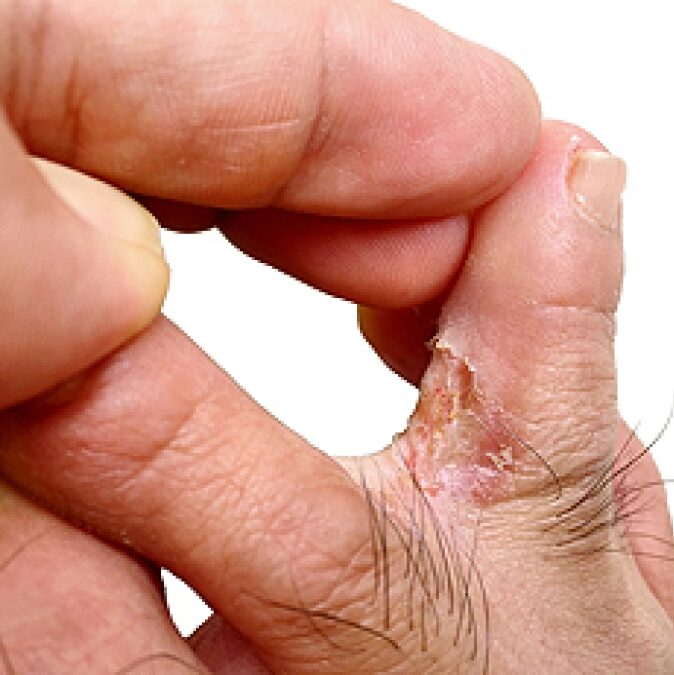
Athlete’s foot is a common fungal skin infection. It often causes itchy, flaky or cracked skin between the toes, but it can also affect the soles and sides of the feet.
Possible symptoms include:
- Itching, burning or soreness
- White, moist or peeling skin between the toes
- Dry, scaly or cracked areas
- Red or inflamed skin
- Small blisters
- Repeated symptoms that temporarily improve and return
Several other skin conditions can look similar, so persistent symptoms may require assessment rather than repeated guesswork with assorted tubes from the bathroom cabinet.
Can I treat athlete’s foot myself?
A pharmacist can advise about antifungal creams, sprays or powders. Treatment usually needs to be used for the full recommended period, even if symptoms begin to improve sooner.
Keeping the feet dry, changing socks regularly and allowing shoes to dry between uses may help reduce recurrence. Avoid sharing towels, socks or footwear.
When should I see a podiatrist or GP?
Ask for professional advice if:
- You are unsure whether it is athlete’s foot
- Pharmacy treatment has not helped
- The skin is painful, broken or repeatedly bleeding
- Symptoms keep returning
- The nails have also changed
- You have diabetes, poor circulation or reduced immunity
Seek prompt medical advice for rapidly spreading redness, heat, swelling, discharge, severe pain or fever.
How can podiatry help?
A podiatrist can examine the skin, discuss likely causes and advise whether foot-care changes, pharmacy treatment, further testing or referral to another healthcare professional may be appropriate.
Fungal Nails, Verrucas & Other Foot-Skin Problems
Is every thick or discoloured nail fungal?
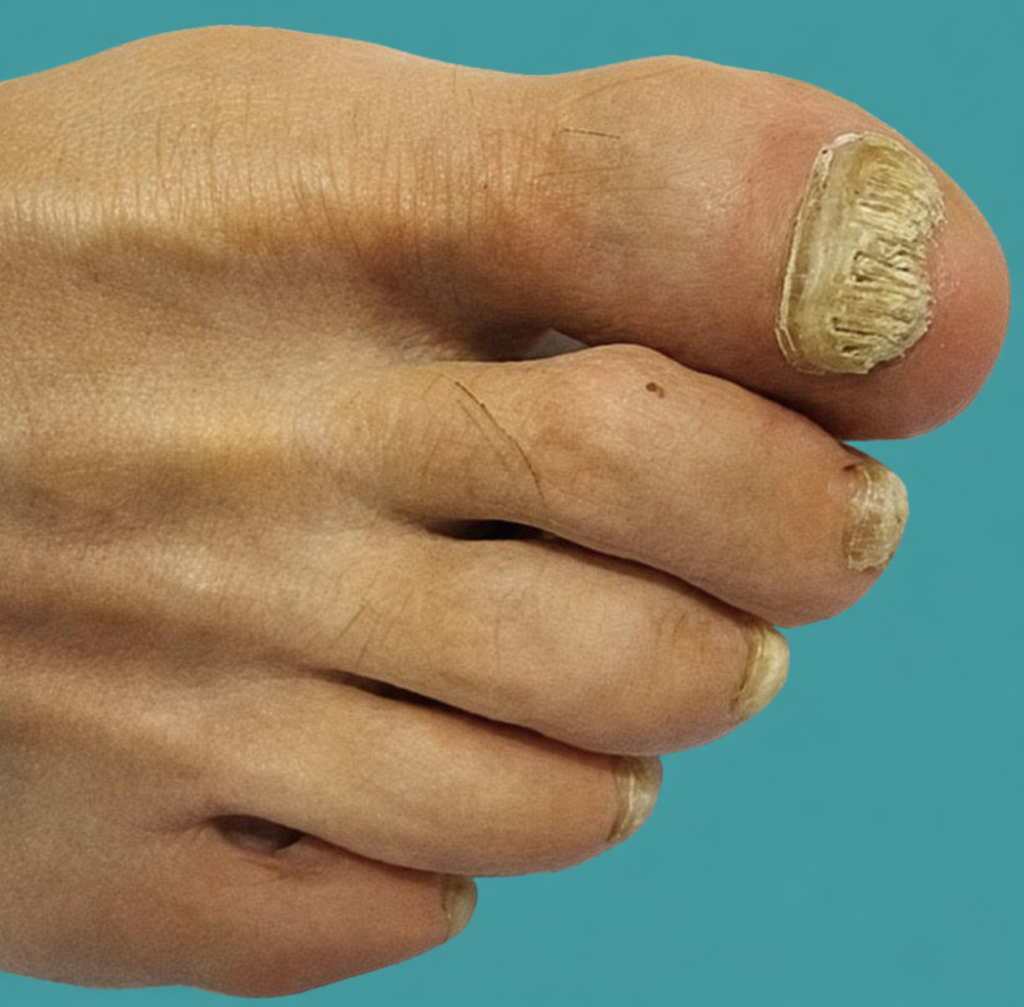
No. Fungal nail infections can make a nail thick, brittle, crumbly or discoloured, but pressure, injury, ageing and some skin conditions can produce similar changes.
A podiatry assessment can examine the nail and help determine whether fungal infection appears likely. In some circumstances, testing may be recommended before starting prolonged treatment.
What is a verruca?
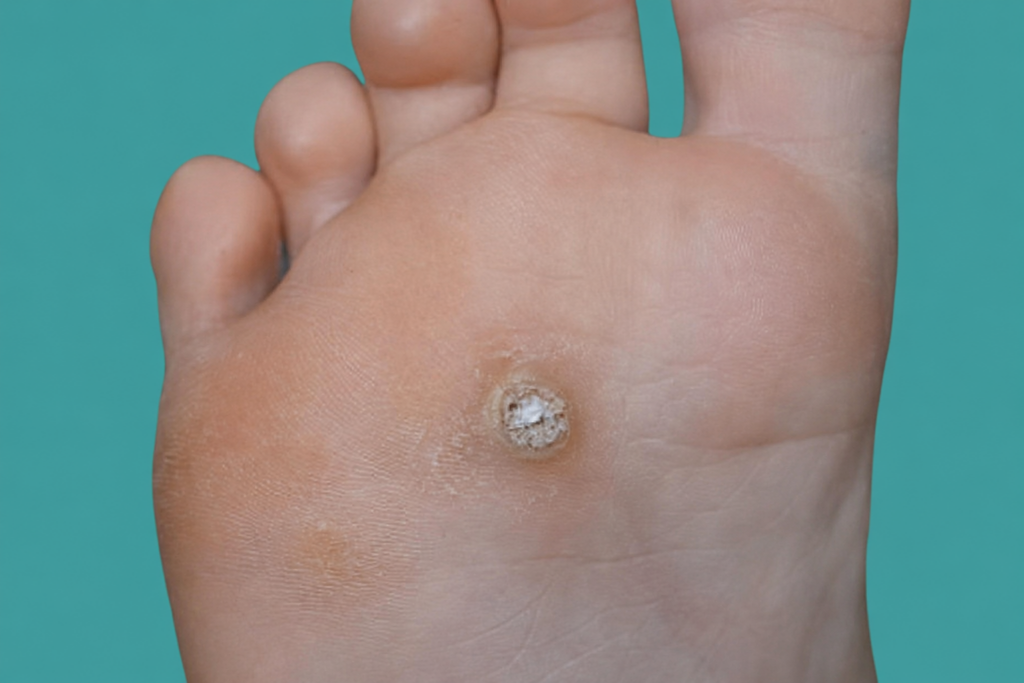
A verruca is a wart on the foot caused by the human papillomavirus. Verrucas may have a rough surface, interrupt the normal lines of the skin and contain small dark dots. When located on a weight-bearing area, they can become flattened beneath a layer of hard skin and may feel uncomfortable.
Treatment may be considered when a lesion is painful, spreading, persistent or when there is uncertainty about what it is.
Other skin problems affecting the feet
Podiatrists also see changes such as:
- Dry, flaky or cracked skin
- Unexplained areas of thickened skin
- Itchy or inflamed patches
- Pressure-related skin changes
- Blisters and areas of repeated rubbing
- Lesions that may require medical assessment
The podiatrist will explain whether the concern can be managed within podiatry or whether assessment by a pharmacist, GP or dermatologist would be more appropriate.
When should a skin or nail change be medically checked?
Obtain medical advice for a new or changing dark mark beneath a nail, an unexplained wound, a lesion that bleeds or changes, spreading inflammation or a skin problem that is not healing normally.
Specialist Assessment & Treatment
For foot pain, walking or gait concerns, diabetes-related checks and treatments requiring further assessment.
What can cause heel or foot pain?
Foot pain does not have one universal cause. Symptoms can arise from muscles, tendons, joints, nerves, irritated soft tissues, footwear, injury or changes in activity.
The location and behaviour of the pain provide useful clues. For example, heel pain that is particularly noticeable during the first few steps after rest may require a different approach from pain following a recent injury or pain accompanied by numbness.
What happens during a podiatry assessment?
Your podiatrist may ask about:
- When and how the problem began
- Where the pain is located
- Activities that improve or aggravate it
- Previous injuries and medical conditions
- Work, exercise and usual footwear
The physical examination may consider the painful area, joint movement, muscle and tendon function, foot position, pressure and how you stand or walk.
Common reasons people request an assessment include:
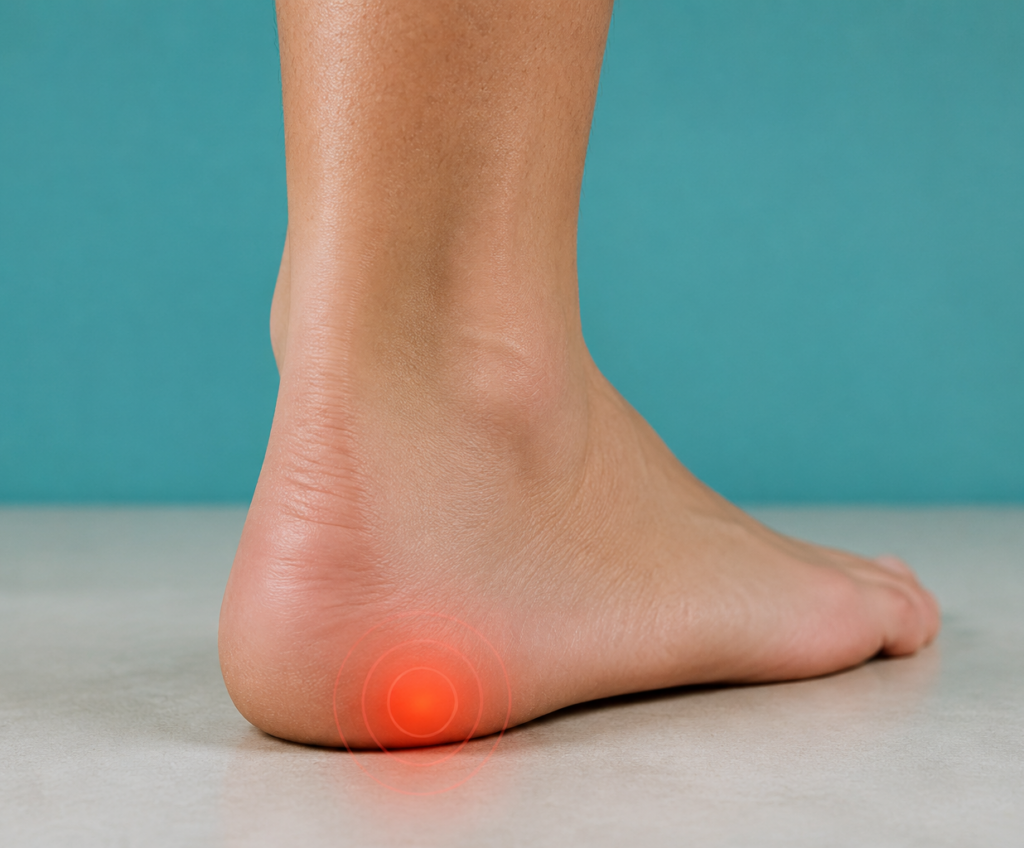
- Pain beneath or behind the heel
- Arch pain
- Pain around the ball of the foot
- Forefoot or toe pain
- Discomfort during walking, work or sport
- Symptoms after changing footwear or activity
- Recurring foot pain without an obvious injury
What treatment might be suggested?
Recommendations depend on the findings and may include activity advice, exercises, footwear changes, padding, temporary support or insoles. If another cause is suspected, the podiatrist may recommend medical assessment, imaging or referral to a more appropriate practitioner.
Podiatry cannot guarantee that every episode of foot pain will resolve, but a proper assessment can help identify reasonable management options.
When is foot pain urgent?
Seek prompt medical advice for severe pain following injury, an inability to bear weight, a hot and markedly swollen foot, spreading redness, a new wound or sudden pain and swelling in the calf.
Book with Richard ONLY
When might a gait assessment be useful?
A gait assessment considers how you stand and walk and how your feet and lower limbs move during an activity.
It may be useful when you experience:
- Repeated foot discomfort during walking
- Uneven shoe wear
- A noticeable change in walking
- Difficulty finding comfortable footwear
- Recurrent pressure beneath particular areas
- Concerns about balance or stability
- Symptoms associated with work, exercise or sport
Not every variation in foot posture or walking style is a problem. Many differences are normal and do not require correction. Assessment is most useful when there are symptoms, repeated injuries or a meaningful effect on everyday activity.
What does the assessment involve?
Depending on the concern, the podiatrist may examine:
- Foot and lower-limb movement
- Joint range of movement
- Muscle strength and control
- Areas of tenderness or repeated pressure
- Standing posture
- Walking pattern
- Footwear and wear patterns
You may be asked to bring footwear used for work, exercise or the activity that aggravates your symptoms.
Will I automatically need insoles?
No. Insoles are only one possible management option. Advice may instead focus on footwear, modifying an aggravating activity, exercises, monitoring the problem or referral for another type of assessment.
Where insoles are considered, the podiatrist should explain what they are intended to change, their limitations and how to introduce them gradually.
Book a podiatry assessment if pain, pressure or an apparent change in walking is affecting your mobility or activity.
Book with Richard ONLY
Book a Podiatry Appointment with RichardDiabetic Foot Assessments
Why are foot checks important when you have diabetes?
Diabetes can sometimes affect the sensation and circulation in the feet. This can make injuries harder to notice and, for some people, slower to heal.
A diabetic foot assessment helps identify individual risk factors and provides advice about monitoring and protecting your feet. It is an assessment of foot health and risk; it does not replace your wider diabetes care.
What may be checked?
Depending on the appointment and clinical need, a diabetic foot assessment may consider:
- The condition of the skin and toenails
- Cuts, cracks, pressure areas or wounds
- Changes in foot shape
- Sensation in the feet
- Foot pulses and signs relating to circulation
- Footwear fit
- Previous ulcers or infections
- Your ability to check and care for your feet safely
The podiatrist will explain any findings and whether routine self-monitoring, podiatry care or further medical assessment is recommended.
When should I seek urgent help?
If you have diabetes, do not wait for a routine appointment if you notice:
- A new wound, blister or break in the skin
- A red, hot or swollen toe or foot
- Discharge or an unpleasant smell from a wound
- A sudden change in colour
- New or rapidly increasing pain
- A foot that has become hot and swollen without an obvious injury
These problems require prompt assessment through the appropriate NHS or urgent medical service.
Looking after your feet between checks
Check your feet regularly, including between the toes and beneath the feet where possible. Avoid walking barefoot, check inside footwear before putting it on and seek advice rather than treating corns or hard skin with sharp tools or acid-based products.
Booking line: Book a diabetic foot assessment for an individual review of your foot health, sensation, circulation-related signs and personal risk factors.
Image suggestion: Podiatrist performing a monofilament sensation check. Only use a Doppler photograph if CHC uses Doppler during these assessments.
Ingrown Toenail Surgery
When might nail surgery be considered?
Nail surgery may be discussed when an ingrown or severely curved toenail repeatedly causes pain, inflammation or infection, or when conservative treatment has not provided adequate relief.
It is not automatically necessary for every ingrown toenail. The podiatrist will first assess the nail, surrounding skin, medical history and circulation-related risk factors.
What does the procedure involve?
Depending on the assessment, nail surgery may involve removing part of the nail or, less commonly, the complete nail. It is generally performed using a local anaesthetic so that the toe is numb during the procedure.
The podiatrist will explain:
- Which procedure is being recommended
- Why it is considered appropriate
- Possible alternatives
- Expected benefits and limitations
- Potential risks and complications
- Aftercare and dressing requirements
- Likely healing times
- When you may return to usual footwear and activity
You will have the opportunity to ask questions before deciding whether to proceed. Consent to an assessment does not oblige you to have surgery.
What happens afterwards?
The toe will require appropriate dressing and aftercare while it heals. You may need to keep the dressing dry initially, wear roomy footwear and temporarily modify some activities.
Healing time varies according to the procedure, your health and how the toe responds. The clinic should provide specific written aftercare instructions and explain when follow-up is required.
When should I seek advice after surgery?
Contact the clinic or seek medical advice if you develop increasing pain, spreading redness, marked swelling, fever, unexpected bleeding or discharge that concerns you.
Orthotics & Insoles

What is the difference between an insole and an orthotic?
“Insole” is a broad term for something placed inside a shoe. Some provide cushioning or redistribute pressure, while others are selected or modified for a particular foot problem.
The word “orthotic” is sometimes used for more individually prescribed devices. However, expensive or highly customised does not automatically mean suitable or more effective for every person.
When might an insole or another device be considered?
A podiatrist may consider an insole, padding or another simple device when attempting to:
- Cushion a sensitive area
- Redistribute pressure
- Accommodate a foot or toe shape
- Reduce rubbing inside footwear
- Support a short-term management plan working alongside an Osteopath or Physiotherapist
- Make a particular activity more comfortable
Toe separators may sometimes be suggested where toes rub or pressure one another, but they are not appropriate for every foot shape or circulation problem.
Will insoles permanently correct my feet?
Insoles do not create permanent foot and ankle realignment. They do not rebuild or correct the feet. Their purpose is usually to alter pressure, loading or comfort while they are being worn.
Whether they are appropriate depends on your symptoms, assessment, footwear and intended activity.
Often podiatrists work alongside Osteopaths and Physiotherapists if your goal is permanent postural change.
This does depend on individual circumstance, preference and medical history.
Why does footwear matter?
Even a suitable insole may be uncomfortable or ineffective if there is not enough room inside the shoe. Bring frequently worn work, walking or sports shoes to the appointment when possible.
Your podiatrist may discuss fit, width, fastening, heel height, sole flexibility and the space available around the toes.
What happens after an insole is provided?
You may be advised to introduce it gradually and monitor comfort and skin response. Stop using it and contact the clinic if it causes persistent pain, rubbing, blistering or skin damage.